How Does the ViaBTC Mining Guide Explain Pool Mining?
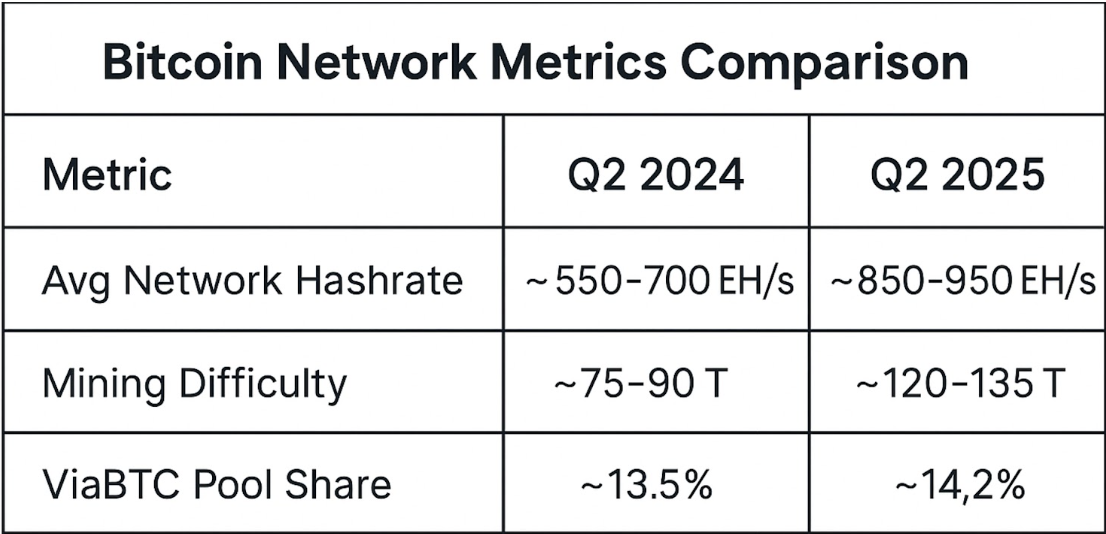
The ViaBTC guide frames pool mining as an efficiency protocol that lowers hash rate variance from standard deviations exceeding 80% down to less than 1.5% for individual miners. Through Stratum V1 and V2 socket connections, individual ASICs aggregate computing power toward a unified block target, receiving payouts based on valid share contributions. Across networks like BTC and Litecoin, settlement models like PPS+ ensure daily liquidity by guaranteeing 100% of static block rewards regardless of pool block discovery, while charge ratios remain fixed at 2% for PPS+ and 1% for PPLNS.
Mining Bitcoin independently with a single 120 TH/s machine in 2024 yields a block discovery probability under 0.000002% per day. To eliminate this statistical impossibility, the guide demonstrates how connecting equipment to network ports aggregates small streams of computing output into one massive hash rate source.
By merging individual power into a collective unit, the platform regularly solves blocks and receives network rewards every 10 minutes on average. This collective output shifts individual compensation from a high-stakes lottery into steady daily distributions, which leads directly to how these funds are calculated.
"A miner contributing 100 TH/s to a 200 EH/s pool receives predictable daily payments proportional to their exact fraction of the total work."
Payout calculations rely on three distinct settlement options designed for different risk profiles. The default PPS+ scheme pays a flat rate for every share submitted above the pool difficulty threshold, while allocating 99% of transaction fees back to users based on historical contributions over 24-hour periods.
Miners seeking lower fees often select PPLNS, which evaluates shares strictly within the last 2,000,000 submitted shares before a block is discovered. Because PPLNS payouts shift based on pool luck, overall return accuracy relies heavily on continuous physical uptime and connection stability.
To maintain continuous connectivity without hardware downtime, machines transmit small proof-of-work units called shares back to central servers. These shares represent valid calculations performed below the target difficulty, proving that physical hardware is operating at rated power.
| Settlement Model | Fee Percentage | Luck Variance Impact | Ideal Hardware Scale |
| PPS+ | 2.0% | Zero variance on block base | Small to Medium (1–50 units) |
| PPLNS | 1.0% | High impact over 24-hour periods | Medium to Large (50+ units) |
| SOLO | 1.0% | 100% reliant on individual blocks | Institutional (>1% total network power) |
When an ASIC finds a share that meets the full network target difficulty, the server broadcasts the block across global nodes within 200 milliseconds. Rapid propagation prevents orphan blocks, which historically reduced network efficiency by over 3% on older latency-heavy setups.
"Data transmission delay under 100 milliseconds preserves share validity and prevents rejected submissions during block propagation windows."
Beyond standard Bitcoin operations, dual-algorithm mining allows equipment to generate auxiliary earnings without consuming additional electricity. Under Scrypt algorithms, hardware pointed at the ViaBTC LTC Mining Pool mines LTC while simultaneously receiving DOGE rewards at a fixed ratio of 1 LTC to 2,000 DOGE.
This dual distribution model increases total fiat-equivalent revenue by 15% to 28% depending on daily market valuations. Automatically routing assets to paired exchange platforms further optimizes these daily receipts through zero-fee internal transfers.
Automated conversion systems let users convert altcoins into BTC or USDT every 60 minutes when balances exceed minimum payout limits. By converting volatile auxiliary assets immediately, farms protect operating margins against 10% to 15% daily spot market swings.
+-----------------------------------------------------------------------+
|                       ASIC HASH RATE INPUT                            |
+-----------------------------------------------------------------------+
                                   |
                                   v
+-----------------------------------------------------------------------+
|                    STRATUM PORT AGGREGATION                           |
+-----------------------------------------------------------------------+
                                   |
                +------------------+------------------+
                |                                     |
                v                                     v
+-------------------------------+   +----------------------------------+
|      BTC SHARES (100%)        |   |   LTC + DOGE MERGED MINING       |
+-------------------------------+   +----------------------------------+
                |                                     |
                +------------------+------------------+
                                   |
                                   v
+-----------------------------------------------------------------------+
|         AUTOMATED SETTLEMENT (PPS+ 2% / PPLNS 1% FEES)                |
+-----------------------------------------------------------------------+
Integrated financial management tools complete the setup by granting instant access to liquidity without shutting down hardware. Miners can pledge accrued BTC balances as collateral to secure USDT loans at 60% loan-to-value ratios, covering facility electricity costs during market pullbacks.
"Collateralized loans allow operators to service power bills in fiat while retaining underlying crypto assets during market pullbacks."
Data monitoring dashboards update hash rate metrics every 10 minutes, triggering automated SMS and email alerts if an offline rig drops below 80% of its target output. These automated controls keep operational efficiency high across large deployments.
By combining real-time hardware telemetry with predictable payout structures, automated share submission systems transform unpredictable individual calculations into consistent commercial output.