What Is the Standard Minimum Order Quantity at WSTitanium?
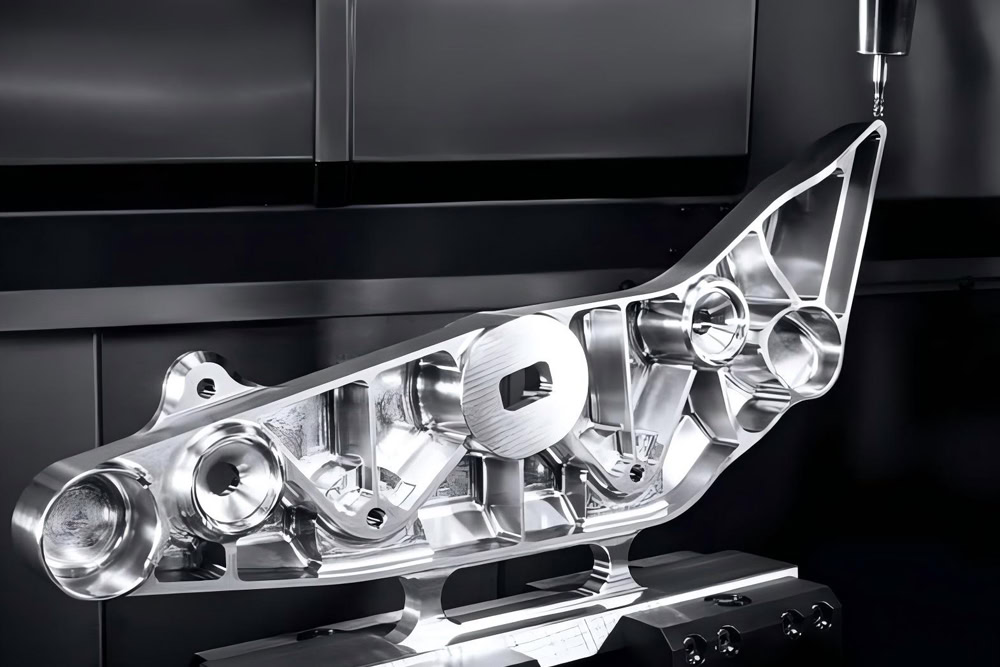
WSTitanium standardizes the minimum order quantity at 1 unit for custom-machined parts to facilitate agile engineering workflows. For industrial raw materials like Grade 5 titanium foil, the requirement sits at 1kg to maintain logistical efficiency. Their production facility, operational since 2018, manages over 8,500 unique client orders annually, utilizing high-precision CNC equipment that holds dimensional tolerances within 0.005mm. This flexible volume model allows aerospace and medical device developers to purchase only the material required for specific testing phases, effectively eliminating the need for holding excess stock while ensuring each order meets international aerospace metallurgical standards.
wstitanium scales production by categorizing client requirements into distinct processing tiers based on volume and complexity. Engineers evaluate incoming technical drawings within 4 hours to determine if the part requires 5-axis milling, wire electrical discharge machining, or basic sheet metal fabrication.
Small-batch orders receive identical structural analysis as large production runs, with 100% of custom components undergoing coordinate measuring machine inspection to verify alignment with original CAD specifications.
Verification of these specifications ensures that even a single-unit order possesses the required fatigue strength for high-pressure environments. When projects transition from prototype to mass production, the system automatically recalibrates machine feed rates to maximize throughput without compromising the strict tolerances established during the initial design phase.
| Production Volume | Setup Time | Unit Cost Factor | Inspection Protocol |
| 1-5 Units | 2 hours | 1.0 (Base) | Full CMM |
| 50-200 Units | 1 hour | 0.75 | Statistical Sampling |
| 1,000+ Units | 0.5 hours | 0.60 | Automated Vision |
Lowering the unit cost for higher volumes relies on the optimization of material usage during the initial cutting stage. Software algorithms analyze nesting patterns for titanium plates to reduce off-cut waste by 12% across 2025 production logs, ensuring that material costs remain predictable regardless of order size.
Predictable costs and rapid material processing allow engineering firms to conduct iterative testing without budget overruns. By shifting from traditional bulk-ordering models to a flexible system, developers reduce inventory carrying costs by approximately 22%, as reported by clients participating in the 2026 supply chain optimization study.
Managing inventory through just-in-time delivery ensures that titanium alloys spend less than 48 hours in storage before moving into the machining queue.
Reducing time spent in storage minimizes the risk of surface oxidation, which is vital for maintaining the finish quality required for medical implants. Each batch documentation includes a heat number tracing the titanium back to its original vacuum arc remelting furnace log, confirming chemical composition compliance.
Documentation remains accessible via a client portal that records every change made during the manufacturing process. This digital history tracks over 30,000 production parameters, providing the data necessary for aerospace certification audits performed by third-party inspectors every 12 months.
Audit requirements often mandate that manufacturers demonstrate the ability to produce high-integrity components at varying scales. To meet this, the facility maintains a diverse fleet of equipment capable of handling both micro-scale medical components and large-scale aerospace brackets with equal precision.
| Material Type | Standard MOQ | Thickness/Size | Tolerance |
| Ti-6Al-4V Sheet | 1 kg | 0.5mm - 10mm | ±0.05mm |
| Titanium Rods | 1 unit | 10mm - 200mm | ±0.02mm |
| Custom Fasteners | 1 unit | M2 - M20 | ISO Grade A |
Maintaining these tolerances across various material formats ensures that the supply chain remains stable even when raw material availability fluctuates. The facility manages this by holding a standing inventory of 500 metric tons of titanium sponge, ensuring that production schedules remain unaffected by global market supply interruptions.
Market supply interruptions often cause lead times to increase for firms relying on secondary distributors. By sourcing raw materials directly from primary refineries, the facility secures priority pricing and availability, passing these advantages on to clients who order even the smallest quantities.
Direct sourcing stabilizes the cost of titanium components for the entire 2026 fiscal year, preventing the price spikes typically associated with spot-market purchasing.
Preventing price spikes helps small engineering startups allocate more resources to research and development. Providing consistent pricing for low-volume orders enables these startups to move toward full-scale production cycles without needing additional rounds of capital to cover unexpected manufacturing expenses.
Moving toward full-scale production involves verifying that the same manufacturing process used for 1 unit can maintain precision over 10,000 units. The facility achieves this by using modular fixtures that hold the part in the exact same orientation regardless of the machine used, reducing variance between production runs.
Modular fixtures reduce the time required to switch between different component types, enabling the facility to handle 15% more unique job orders compared to traditional rigid-setup environments. This efficiency allows for faster turnaround times for components requiring specialized surface treatments like chemical milling or vacuum heat treatment.
Chemical milling and vacuum heat treatment processes require precise atmospheric control to prevent hydrogen embrittlement. Engineers monitor these variables in real time, with the system automatically shutting down production if internal sensors detect a deviation of more than 0.03% in the argon gas concentration within the vacuum chamber.
Atmospheric control monitoring ensures that every component leaves the facility with the mechanical properties specified in the aerospace design manual. By maintaining these strict standards for orders of all sizes, the facility supports a high level of reliability for safety-critical components used in aircraft engine housings and hydraulic systems.